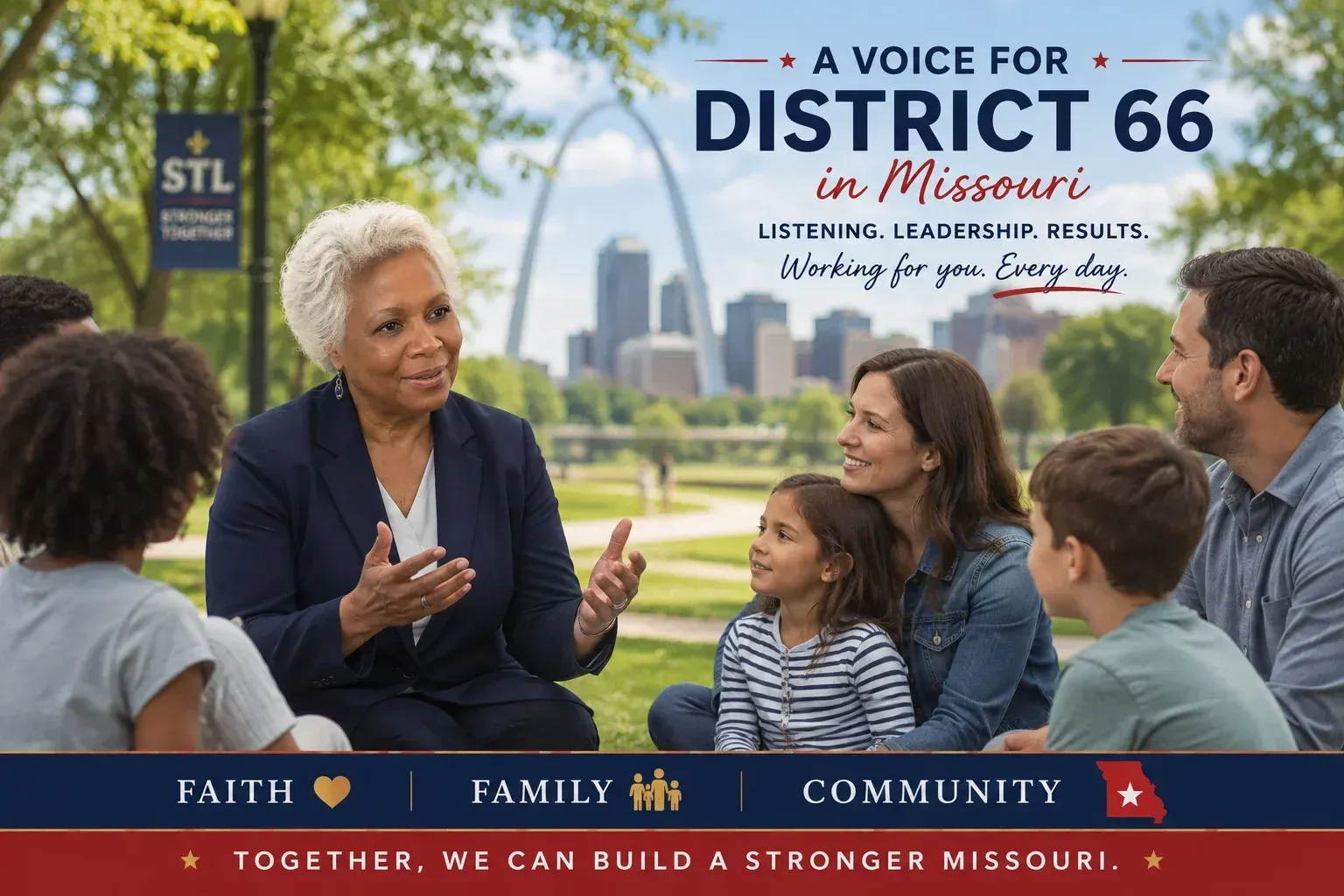
The Platform That Changed Her Mind: Why Laura Mitchell Riley Believes Every Missouri Voter Should Read the Party Platforms

When Laura Mitchell Riley sat down and actually read the party platforms for herself, her perspective shifted profoundly. She believes Missouri voters can only make informed decisions by understanding the full landscape of political thought available to them — not just the two names that dominate the headlines, but the range of platforms represented by the Democratic, Republican, Independent, Libertarian, and Green parties. Discover how delving into political party platforms can empower you to vote with confidence and clarity in this crucial election.
How the Party Platforms Sparked Laura Mitchell Riley's Transformation
In the United States, political party platforms often reside in the background, overshadowed by speeches, ads, and headlines. Yet for Laura Mitchell Riley — a former, lifelong Missouri Democrat with a passion for public service — it was reading these foundational documents that upended her assumptions and ultimately reshaped her political identity. Disappointed by partisan rhetoric and eager to make an informed decision rather than vote out of habit, Laura did something few voters ever attempt: she went looking for what the parties themselves actually say they stand for. She didn't stop at the two major parties, either. Missouri ballots and the broader national conversation also include the Independent, Libertarian, and Green parties, and Laura believes any voter serious about an informed decision owes it to themselves to at least know what each represents, even if they ultimately choose between the two major parties.
Laura's story isn't about switching allegiances because of a candidate or a trending talking point. It's about the responsibility and dignity of citizenship — a call to all Missouri voters, especially those who consider themselves independent, frustrated by partisan bickering, or unsure of their political home. Her message is simple: before you vote, know what the platforms actually say. Only then can you claim your vote as your own — an act rooted in true knowledge, not inherited opinion or media shorthand.
"I didn't change parties because of a headline. I changed because I sat down and read each platform word for word." — Laura Mitchell Riley
My Personal Story
Laura is open about the fact that her own journey wasn't a slow drift — it had a specific turning point, and she doesn't shy away from telling it plainly.
"I voted Democratic until 2016," Laura says. "When Hillary Clinton and Donald Trump were running, I didn't like either candidate. I felt stuck, and honestly a little lost about what to do. So I prayed about it. And within five minutes, a member of my church, Jason, sent me the Democratic and Republican platforms on my phone.
"I sat down and listened to them for about ten minutes, and I realized it wasn't about my personal preference — it was about God. That was the turning point that led me to start voting Republican."
For Laura, that ten minutes reframed everything. It wasn't a campaign ad or a debate performance that moved her; it was sitting with the actual language of the platforms and measuring it against her own convictions. She's quick to say that she isn't asking anyone to reach the same conclusion she did — only to go through the same honest process: read the platforms, sit with them, and decide for yourself what aligns with what you believe.
What You'll Learn About Political Party Platforms and Informed Voting
- Why political party platforms matter for every Missouri voter
- How reading the platforms — including third-party options like the Libertarian and Green parties — can change perspectives
- Laura Mitchell Riley's approach to independent, informed citizenship
- Ways to find and interpret party platforms as a voter
- The difference between campaign rhetoric and party platforms
The Journey: From Lifelong Democrat to Informed Citizen
Background: Laura Mitchell Riley's Political Identity and Public Service Interest
For as long as she could remember, Laura Mitchell Riley described herself as a lifelong Democrat. Raised in Missouri by parents who admired figures like George Washington and Thomas Jefferson, she believed deeply in the value of service to her community and the principles handed down in her family. Like many of her peers, Laura's early voting habits were shaped by dinner-table conversations, local news, and the general consensus in her hometown. Yet as Laura became more involved in civic dialogue, she grew increasingly curious about the foundations of the political system itself. She realized political parties were more than campaign signs or a candidate's latest statement — they were built on core documents, drafted at each party's convention, laying out real policy priorities. And she realized the field was bigger than the two parties she heard about most: the Independent, Libertarian, and Green parties each offer their own vision, even if they don't carry the same media weight as the Democratic and Republican parties.
Laura's interest in public service made her want to approach her civic duties with intention. Instead of relying solely on media summaries, she decided that understanding what the parties hold as their core beliefs — by reading their platforms directly — could provide the clarity she needed to navigate complicated political issues.
The Turning Point: Curiosity and the Decision to Read the Platforms
Everything shifted during the contentious 2016 election season, when campaign rhetoric escalated and policy discussions grew more polarized. Laura felt overwhelmed by conflicting reports and wary of the "us vs. them" dialogue saturating the news. As she describes above, that discomfort became prayer, and prayer became action — a friend from church put both major platforms in her hands, and she finally sat down and went through them herself.
"I wanted to make sure I wasn't voting out of habit, but from conviction."
Reading the Platforms: Surprises, Reflections, and Core Values
Assumptions Versus Reality
Like many voters, Laura assumed the gap between the parties was mostly style or attitude — sometimes even just which candidate happened to be in the headlines. As she read, she realized her preconceptions were rooted more in soundbites than in the platforms themselves. The documents were nuanced and detailed, laying out clear positions on taxes, social issues, education, and the role of government. Widening the lens to include the Independent, Libertarian, and Green platforms only reinforced for Laura how much more texture exists in American political thought than the two-party shorthand suggests — from the Libertarian emphasis on limited government and individual liberty, to the Green Party's focus on environmental and social priorities, to the varied positions gathered under the Independent banner.
Key Issues That Influenced Laura's Perspective
As she read, Laura was particularly struck by the distinctions on healthcare, education, and tax policy. The Democratic platform emphasized expanded access to care and continued investment in public schools. The Republican platform leaned toward private-sector solutions and school choice. What surprised her most was how each platform explained the "why" behind its policies. That focus on foundational reasoning — not just the policy itself, but the values underneath it — is what moved Laura past slogans and into the core of the debate, and ultimately toward the values she recognized as her own.
Comparing the Platforms: What Do the Parties Stand For?
Laura believes it's vital for voters — not just in Missouri, but across the country — to move beyond campaign ads and compare what the platforms actually say, across the full range of options on the ballot.
| Issue | Democratic | Republican | Independent | Libertarian | Green |
|---|---|---|---|---|---|
| Healthcare | Universal access focus | Private sector emphasis | Varies by candidate | Free-market, minimal mandates | Universal, publicly funded |
| Education | Public funding priorities | School choice options | Varies by candidate | Local control, school choice | Public investment, equity focus |
| Tax Policy | Progressive taxation | Lower tax emphasis | Varies by candidate | Significantly reduced taxation | Progressive, wealth-focused |
| Social Issues | Expanding civil rights | Traditional values | Varies by candidate | Personal liberty, non-interference | Social and environmental justice |
Beyond Campaigns: Why Platforms Matter More Than Ads or Candidates
The general public often forms lasting opinions based on debates, television advertising, or a viral moment involving a candidate. But Laura learned those moments rarely reflect the long-term direction a party holds for the country. Platforms are crafted to present each party's governing vision — a vision that outlasts any single candidate. In the American political system, these documents are the foundation for what lawmakers actually work toward once the campaign banners come down, whether that party is the Democratic, Republican, Independent, Libertarian, or Green Party.
"Campaigns end. Candidates change. Platforms reveal the unvarnished truth about the party and its long-term philosophy." – Laura Mitchell Riley
A Message for Every Age Group
What gives Laura’s conviction such force is that she does not reserve it for older voters, longtime partisans, or policy experts. She is determined to reach every generation.
She wants first-time voters to understand that casting a ballot should be an act of ownership, not imitation. Before they help shape the country’s future, they should know what the parties actually propose—not merely what commentators, campaigns, or trending talking points say about them.
She wants parents concerned about education and working-age adults pressed by busy lives to resist the temptation to vote on surface impressions. Life is demanding and campaign shorthand is seductive, but Laura believes this is exactly why discipline matters. A rushed vote based on personality leaves the most important part of citizenship undone.
She wants older and longtime voters to revisit assumptions they may have carried for years. Habit and loyalty are powerful, but Laura’s own journey taught her that familiarity should never exempt anyone from scrutiny. No one should vote a certain way simply because they always have.
Her appeal reaches especially to those who consider themselves independent, frustrated by partisan bickering, or unsure of their political home. Whether someone is eighteen or eighty, Laura believes the responsibility is identical: know what the platforms say before deciding who deserves your vote.
Common Questions About Party Platforms and Informed Voting
What is a political party platform and why is it important? A political party platform is an official written document developed by a party's leadership — often at its convention — that outlines core beliefs, priorities, and solutions for major national issues. These platforms serve as roadmaps for lawmakers and candidates, reflecting a party's stance far beyond campaign slogans.
How can Missouri voters access the platforms to make an informed decision? Missouri voters can access the platforms of the Democratic, Republican, Independent, Libertarian, and Green parties through each party's official website. Local libraries and civic engagement organizations also maintain summaries and full-text versions.
Do party platforms really impact how a party governs? Yes. While candidates may adapt their messaging for a campaign, their actual policy positions and legislative priorities are usually drawn from the party platform. Platforms influence the bills introduced and the priorities pushed once the election is over.
Three Lasting Lessons from Laura Mitchell Riley's Journey
- A thoughtful, research-based approach to voting beats emotional or inherited choices.
- Party platforms — including those of smaller parties like the Independent, Libertarian, and Green — are valuable and underestimated resources for understanding where the parties actually stand.
- Direct engagement with the platforms makes representative democracy stronger.
"You don't have to agree with me," Laura concludes. "But you owe it to yourself and your community to look at the platforms — then decide for yourself."
Ready to Get Informed? Read the Platforms Before You Vote
Laura Mitchell Riley's journey shows that political party platforms aren't just background noise in American politics — they're the backbone of the political system itself. Missouri voters have an opportunity, and a responsibility, to empower their ballots with knowledge and conviction. Laura doesn't ask anyone to agree with her outcome; she challenges every citizen to reach their own conclusions, rooted in firsthand evidence and respect for independent thinking.
Take the challenge: read the platforms — then decide for yourself.
Sources
- Party Platforms — presidency.ucsb.edu
- Platform — ballotpedia.org
- Democratic Party Platform — democrats.org
- Republican Party Platform — Republican National Committee | RNC
- Political Parties, Platforms, and Planks — teachdemocracy.org
- National Political Party Platforms — presidency.ucsb.edu
- Voting and Election Guide: Political Parties & Party Platforms — libguides.adelphi.edu
- Presidential Elections and the American Political System — dk.usembassy.gov
- Political platform — en.wikipedia.org